TAXONOMY - PHYLOGENY -CULTIVATION -BREEDING AND SELECTION PROGRAMS -DISEASES PESTS AND DISORDERS-USES NUTRITIONS
HOSTORY- GENETICS - IN CULTURE -GALLERY -
BENEFITS OF PEACANS -HEART HEALTHYH -IMPROVES DIGESTION - HELPS OF WEIGHT LOSS-REDUCES THE RISK OF CERTAIN CANCER -ANTI INFLAMMATORY BENEFITS -BOOSTS IMMUNITY -PREVENTS SKIN PROBLEMS -ANTI AGING BENEFITS -STIMULATES HAIR GROWTH -PREVENTS HAIR LOSS
species of hickory native to the Southern United States and northern Mexico in the region of the Mississippi River.
The tree is cultivated for its seed primarily in the U.S. states of Georgia,New Mexico,and Texas,and in Mexico. The seed is an edible nut used as a snack and in various recipes, such as praline candy and pecan pie. The pecan is the state nut of Alabama, Arkansas, California, Texas, and Louisiana, and is also the state tree of Texas.
Name
Pecan derives from an Algonquian word variously referring to pecans, walnuts, and hickory nuts. There are many pronunciations, some regional and others not. There is little agreement in the United States regarding the "correct" pronunciation, even regionally.
In 1927, the National Pecan Growers Association acknowledged variant pronunciations while designating one as official and correct: "pronounced as though spelled pea-con ... those in the habit of using any other pronunciation therefore be requested henceforth to adopt exclusively the pronunciation above specified above and hereby adopted by the Association."
Description
The pecan tree is a large deciduous tree, growing to 20–40 m (66–131 ft) in height, rarely to 44 m (144 ft). It typically has a spread of 12–23 m (39–75 ft) with a trunk up to 2 m (6 ft 7 in) diameter. A 10-year-old sapling grown in optimal conditions will stand about 5 m (16 ft) tall. The leaves are alternate, 30–45 cm (12–18 in) long, and pinnate with 9–17 leaflets, each leaflet 5–12 cm (2–4+1⁄2 in) long and 2–6 cm (1–2+1⁄2 in) broad.
A pecan, like the fruit of all other members of the hickory genus, is not truly a nut, but is technically a drupe, a fruit with a single stone or pit, surrounded by a husk. The husks are produced from the exocarp tissue of the flower, while the part known as the nhttp ut develops from the endocarp and contains the seed. The husk itself is aeneous, that is, brassy greenish-gold in color, oval to oblong in shape, 2.6–6 cm (1–2+3⁄8 in) long, and 1.5–3 cm (5⁄8–1+1⁄8 in) broad. The outer husk is 3–4 mm (1⁄8–5⁄32 in) thick, starts out green, and turns brown at maturity, at which time it splits off in four sections to release the thin-shelled seed.
Taxonomy
Carya illinoinensis, is a member of the Juglandaceae family. Juglandaceae are represented worldwide by seven and ten extant genera and more than 60 species. Most of these species are concentrated in the Northern Hemisphere of the New World, but some can be found on every continent except Antarctica.
Phylogeny
The first fossil examples of Juglandaceae appear during the Cretaceous. Differentiation between the subfamilies of Engelhardioideae and Juglandioideae occurred during the early Paleogene, about 64 million years ago. Extant examples of Engelhardioideae are generally tropical and evergreen, while those of Juglandioideae are deciduous and found in more temperate zones.
The second major step in the development of pecan was a change from wind-dispersed fruits to animal dispersion. This dispersal strategy coincides with developing a husk around the fruit and a drastic change in the relative concentrations of fatty acids. The ratio of oleic to linoleic acids is inverted between wind- and animal-dispersed seeds.Further differentiation from other species of Juglandaceae occurred about 44 million years ago during the Eocene. The fruits of the pecan genus Carya differ from those of the walnut genus Juglans only in the formation of the husk of the fruit. The husks of walnuts develop from the bracts, bracteoles and sepals, or sepals only. The husks of pecans develop from the bracts and the bracteoles only.
Cultivation
Pecans are one of the most recently domesticated of the major crops. Although wild pecans were well known among native and colonial Americans as a delicacy, the commercial growth of pecans in the United States did not begin until the 1880s.[16] As of 2014, the United States produced an annual crop of 119.8 million kilograms (264.2 million pounds), with 75% of the total crop produced in Georgia, New Mexico, and Texas.[4] They can be grown from USDA hardiness zones approximately 5 to 9, and grow best where summers are long, hot and humid. The nut harvest for growers is typically around mid-October.
Outside the U.S., Mexico produces nearly half of the world's total, similar in volume to that of the U.S., together accounting for 93% of global production.[17] Pecan trees require large quantities of water during the growing season, and most orchards in the region use flood irrigation to optimize consumptive water use and production of mature pecans.[18] Generally, two or more trees of different cultivars must be present to pollinate each other.[19]
A cluster of pecan fruit is exposed as hulls dry out and split open.
Choosing cultivars can be a complex practice, based on the Alternate Bearing Index (ABI) and their period of pollinating.[19] Commercial growers are most concerned with the ABI, which describes a cultivar's likelihood to bear on alternating years (index of 1.0 signifies the highest likelihood of bearing little to nothing every other year). The period of pollination groups all cultivars into two families: those that shed pollen before they can receive pollen (protandrous) and those that shed pollen after becoming receptive to pollen (protogynous).[20] State-level resources provide recommended varieties for specific regions.[21][22]
Native pecans in Mexico are adapted from zones 9 to 11.[23] Little or no breeding work has been done with these populations. A few selections from native stands have been made, such as Frutosa and Norteña, which are recommended for cultivation in Mexico.[24][25] Improved varieties recommended for cultivation in Mexico are USDA-developed cultivars. This represents a gap in breeding development given that native pecans can be cultivated at least down to the Yucatán peninsula while the USDA cultivars have chilling hour requirements greater than those occurring in much of the region.[26] Some regions of the U.S. such as parts of Florida and Puerto Rico are zone 10 or higher, and these regions have limited options for pecan cultivation. 'Western' is the only commonly available variety that can make a crop in low-chill zones.[27]
While selection work has been done since the late 19th century, most acreage of pecans grown today is of older cultivars, such as 'Stuart', 'Schley', 'Elliott', and 'Desirable', with known flaws, but also with known production potential. Cultivars such as 'Elliot' are increasing in popularity due to resistance to pecan scab.[28] The long cycle time for pecan trees plus financial considerations dictate that new varieties go through an extensive vetting process before being widely planted. Numerous varieties produce well in Texas, but fail in the Southeastern U.S. due to increased disease pressure. Selection programs are ongoing at the state level, with Alabama, Arkansas, Florida, Georgia, Kansas, Missouri, New Mexico, and others having trial plantings.
Varieties adapted from the southern tier of states north through some parts of Iowa and even into southern Canada are available from nurseries. Production potential drops significantly when planted further north than Tennessee. Most breeding efforts for northern-adapted varieties have not been on a large enough scale to significantly affect production. Varieties that are available and adapted (e.g., 'Major', 'Martzahn', 'Witte', 'Greenriver', 'Mullahy', and 'Posey') in zones 6 and farther north are almost entirely selections from wild stands. 'Kanza', a northern-adapted release from the USDA breeding program, is a grafted pecan having high productivity and quality, and cold tolerance.[29]
Diseases, pests, and disorders
Pecans are subject to various diseases, pests, and physiological disorders that can limit tree growth and fruit production. These range from scab to hickory shuckworm to shuck decline.
Pecans are prone to infection by bacteria and fungi such as pecan scab, especially in humid conditions. Scab is the most destructive disease affecting pecan trees untreated with fungicides. Recommendations for preventive spray materials and schedules are available from state-level resources.
In the Southeastern U.S., nickel deficiency in C. illinoinensis produces a disorder called "mouse-ear" in trees fertilized with urea.[30] Similarly, zinc deficiency causes rosetting of the leaves. Various other disorders are documented, including canker disease and shuck decline complex.
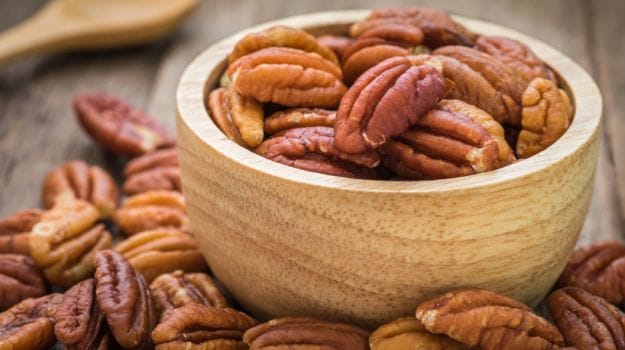
Pecan halves as snack foodPecan pie
Uses
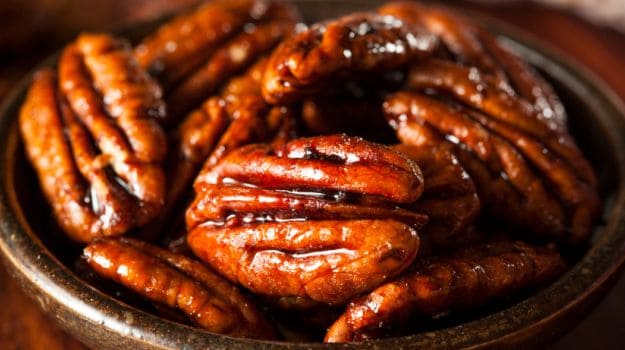
Pecan seeds are edible, with a rich, buttery flavor. They can be eaten fresh or roasted, or used in cooking,[31] particularly in sweet desserts, such as pecan pie, a traditional Southern U.S. dish. Butter pecan is also a common flavor in cookies, cakes, and ice creams. Pecans are a significant ingredient in American praline candy.[32] Other applications of cooking with pecans include pecan oil and pecan butter.
Pecan wood is used in making furniture and wood flooring,[33] as well as flavoring fuel for smoking meats, giving grilled foods a sweet and nutty flavor stronger than many fruit woods.[34]
Before European settlement, pecans were widely consumed and traded by Native Americans. As a wild forage, the fruit of the previous growing season is commonly still edible when found on the ground.
Pecans first became known to Europeans in the 16th century. The first Europeans to come into contact with pecans were Spanish explorers in what is now Louisiana, Texas, and Mexico. These Spanish explorers called the pecan, nuez de la arruga, which roughly translates to "wrinkle nut". Because of their familiarity with the genus Juglans, these early explorers referred to the nuts as nogales and nueces, the Spanish terms for "walnut trees" and "fruit of the walnut". They noted the particularly thin shell and acorn-like shape of the fruit, indicating they were referring to pecans. The Spaniards took the pecan into Europe, Asia, and Africa in the 16th century.
In 1792, William Bartram reported in his botanical book, Travels, a nut tree, Juglans exalata that some botanists today argue was the American pecan tree. Still, others argue hickory, Carya ovata. Pecan trees are native to the United States, and writing about the pecan tree goes back to the nation's founders. Thomas Jefferson planted pecan trees, C. illinoinensis (Illinois nuts), in his nut orchard at his home, Monticello, in Virginia. George Washington reported in his journal that Thomas Jefferson gave him "Illinois nuts", pecans, which Washington then grew at Mount Vernon, his Virginia home.
Commercial production of pecans was slow because trees were slow to mature and bear fruit. More importantly, the trees grown from the nuts of one tree have very diverse characters. To speed nut production and retain the best tree characteristics, grafting from mature, productive trees was the apparent strategy. However, this proved technically challenging. The Centennial cultivar was the first to be successfully grafted. This was accomplished by an enslaved person called Antoine in 1846 or 1847, who was owned by Jacques Telesphore Roman of the Oak Alley Plantation near the Mississippi River. The scions were supplied by Dr. A. E. Colomb, who had unsuccessfully attempted to graft them.[37]
Genetics
Pecan is a 32-chromosome species (1N = 16) that readily hybridizes with other 32-chromosome members of the Carya genus, such as Carya ovata, Carya laciniosa, Carya cordiformis and has been reported to hybridize with 64-chromosome species such as Carya tomentosa. Most such hybrids are unproductive. Hybrids are referred to as "hicans" to indicate their hybrid origin.[38] Recent efforts at NMSU to complete a pecan genome showed that DNA introgressed from C. aquatica (water hickory), C. myristiciformis (nutmeg hickory), and C. cordiformis (bitternut hickory) is present in commercial pecan varieties grown today.
In culture
In 1919, the 36th Texas Legislature made the pecan tree the state tree of Texas; in 2001, the pecan was declared the state's official "health nut", and in 2013, pecan pie was made the state's official pie.[40] The town of San Saba, Texas claims to be "The Pecan Capital of the World" and is the site of the "Mother Tree" (c. 1850) considered to be the source of the state's production through its progeny.[41][42]
Alabama named the pecan the official state nut in 1982.[43]Arkansas adopted it as the official nut in 2009.[44]California adopted it, along with the almond, pistachio, and walnut, as one of four state nuts in 2017.[45]Louisiana, known for pralines, adopted the Pecan as its official state nut in 2023.[46] In 1988, Oklahoma enacted an official state meal which included pecan pie.
10 Health Benefits of Pecans: Why They Are Good for You
The pecan nuts with their contoured structure, crunchy texture and buttery flavour make for an interesting ingredient to include in a number of dishes, and they look pretty on the plate too. Native to America, these pricey nuts are related to the walnut and grow enclosed in a brownish-red oval shell. Now whether you say pee-can or peh-kahn, they are probably one of the most sought after nuts and can be tossed in just about anything. You can stuff them in peppers with goat cheese or toss them in a salad for some crunch. Pecans pair beautifully with caramel too, so just add a handful on top of a caramel cheesecake for a flavour-packed bite every single time. Or spruce up an ice cream with a splash of bourbon and candied pecans in the summer. You can even add a crumbly pecan topping the next time you bake a coffee cake, or add it to a batch of double chocolate chip cookies.Nutrition in a NutshellAccording to a study in the Journal of Agricultural and Food Chemistry, pecans (19 halves, 193 calories per serving) contain more antioxidants than any other tree nut. Pecan nuts in fact rank among the top 15 foods with the highest levels of antioxidants according to the USDA. They are also a powerhouse of vitamins and minerals such as manganese, potassium, calcium, iron, magnesium, zinc, and selenium, offering some wonderful health benefits.
Come the holiday season and pecan pies are a rage. The pecan nuts with their contoured structure, crunchy texture and buttery flavour make for an interesting ingredient to include in a number of dishes, and they look pretty on the plate too. Native to America, these pricey nuts are related to the walnut and grow enclosed in a brownish-red oval shell. Now whether you say pee-can or peh-kahn, they are probably one of the most sought after nuts and can be tossed in just about anything. You can stuff them in peppers with goat cheese or toss them in a salad for some crunch. Pecans pair beautifully with caramel too, so just add a handful on top of a caramel cheesecake for a flavour-packed bite every single time. Or spruce up an ice cream with a splash of bourbon and candied pecans in the summer. You can even add a crumbly pecan topping the next time you bake a coffee cake, or add it to a batch of double chocolate chip cookies.Nutrition in a NutshellAccording to a study in the Journal of Agricultural and Food Chemistry, pecans (19 halves, 193 calories per serving) contain more antioxidants than any other tree nut. Pecan nuts in fact rank among the top 15 foods with the highest levels of antioxidants according to the USDA. They are also a powerhouse of vitamins and minerals such as manganese, potassium, calcium, iron, magnesium, zinc, and selenium, offering some wonderful health benefits.
Health Benefits of Pecans:
1. Heart Healthy
Loaded: 2.35%
Pecan nuts contain monounsaturated fats such as oleic acid along with phenolic antioxidants which help reduce the risk of heart disease. According to the National Pecan Shellers Association, adding a handful of pecan nuts in your diet helps decrease LDL i.e. ‘badcholesterol’ and increase HDL i.e. ‘good cholesterol’, which in turn prevent stroke and coronary artery disease.
2. Improves DigestionNutritionist Anshul Jaibharat says, “Since pecan nuts are fiber-packed, they promote colon health and facilitate regular bowel movements. Pecan nuts prevent constipation and reduce the risk of hemorrhoids and colitis by cleaning out the gastrointestinal system.”3. Helps with Weight LossConsuming nuts enhances satiety and increases metabolism, research has indicated that a diet comprising pecan nuts helps in losing weight. The nuts are also very rich sources of several important B-complex groups of vitamins such as riboflavin, niacin, thiamin, pantothenic acid, vitamin B-6, and folates which together help increase the rate of metabolism.
4. Reduces the Risk of Certain CancerPecan nuts protect the human body from cancer due to the anti-proliferative properties of ellagic acid which inhibit DNA binding of certain carcinogens such as nitrosamines and polycyclic aromatic hydrocarbons. They contain oleic acid, a fatty acid which has been found to reduce the risk of breast cancer. Pecan nuts also reduce the risk of colon cancer since they help clean the gastrointestinal system
.5. Anti-Inflammatory BenefitsPecans are rich in magnesium which is known for its anti-inflammatory benefits. Studies have proved that increased magnesium intake reduces inflammatory indicators in the body, and also reduces inflammation in the arterial walls, thus reducing the risk of arthritis, Alzheimer’s disease, cardiovascular disease, and other inflammatory ailments.
6. Boosts ImmunityDr. Manoj K. Ahuja, Healing Touch Hospital, says “Adequate intake of manganese is vital for nerve conduction and brain function, and pecans are a rich source of manganese which is a powerful antioxidant. This trace mineral protects your nerve cells from free-radical damage, thus boosting immunity and protecting the body from diseases, infections, etc.”Skin Benefits and Hair Benefits of Pecans:Pecan nuts are an excellent source of vitamin-E, vitamin-A, zinc, folate and phosphorous which play an important role in maintaining good skin. Here are the skin benefits pecan nuts have to offer.7. Prevents Skin ProblemsThe toxins inside your body cause breakouts, dullness and excess oil. Pecans are packed with fiber and aid in eliminating these toxins and waste from the body, thereby improving the appearance of your skin. Pecan nuts also contain vitamin A and zinc which help achieve a clear complexion and protect against skin infections.8. Anti-aging BenefitsPecan nuts contain numerous antioxidants including ellagic acid, vitamin A and vitamin E which fight and eliminate the free radicals responsible for causing premature skin aging. Thus, pecans can prevent the occurrence of fine lines, wrinkles and pigmentation.9. Stimulates Hair GrowthPecans are an excellent source of L-arginine, an amino acid which, when applied topically helps treat male pattern baldness as well as encourage the growth of healthy hair. L-arginine helps increase flexibility of the artery walls and makes them less prone to blood clots. This in turn increases the rate of blood flow throughout the body and to the hair roots which is vital for healthy hair growth and scalp. 10. Prevents Hair LossLack of iron in the body leads to anemia which is one of the common causes of hair loss. But pecans are a good source of iron and hence, combat hair loss.
When you think of pecans, the first thing to come to mind is probably sweet pecan pie. Pecans are a healthy nut when eaten on their own or as part of a hearty vegetable recipe.
Although pecans are typically associated with desserts, there are many ways to enjoy them in savory dishes. With several health benefits, pecans can easily become your new favorite snack.
Pecan Nutrition Facts
The following nutrition information is provided by the USDA for 1 ounce (28g) of pecan halves (about 19 halves).1
Pecans Nutrition Facts
Calories: 196
Fat: 20g
Sodium: 0mg
Carbohydrates: 4g
Fiber: 2.7g
Sugars: 1.1g
Protein: 2.6g
Iron: 0.7mg
Magnesium: 34.4mg
Zinc: 1.3mg
Thiamin: 0.2mg
Vitamin B5: 0.2mg
Folate: 6.2mcg
Vitamin E: 0.4mg
Carbs
Pecans are naturally low in carbohydrates. One ounce of pecan halves has just 4 grams of carbohydrates, the majority of which come from fiber.
Fats
Pecans are a high-fat nut with 20 grams per ounce. Fortunately, the vast majority of fat in pecans comes from heart-healthy monounsaturated and polyunsaturated fatty acids. There are only 1.7 grams of saturated fat per 1-ounce serving of pecans.
Protein
An ounce of pecans provides 2.6 grams of protein.
Vitamins and Minerals
Pecans have several fat-soluble vitamins, like vitamin E and vitamin A. They also have some B-vitamins, potassium, phosphorus, magnesium, calcium, and zinc.
Health Benefits of Pecans
Many of the health benefits of pecans come from their unsaturated fat and fiber content. Additionally, pecans are high in polyphenols with antioxidant effects.
Aids Diabetes Management
Pecans are beneficial for blood sugar control in several ways. Their healthy fat content and low carbohydrate levels prevent spikes in blood sugar. The fiber in pecans also helps to stabilize blood sugar. Increasing the consumption of tree nuts (without increasing total calorie intake) has been shown to lower hemoglobin A1C levels and fasting glucose, two key markers for diabetes management.2
Supports Weight Loss
According to data from the National Health and Nutrition Examination Survey (NHANES), consuming pecans and other tree nuts is associated with a lower body mass index (BMI) and waist circumference.3 Although pecans are high in calories, they are a satisfying and nutritious food that helps regulate blood sugar and appetite. Stick to a handful or 1/4 cup serving to be mindful of your portion size.
Body Mass Index (BMI) is a dated, biased measure that doesn’t account for several factors, such as body composition, ethnicity, race, gender, and age. Despite being a flawed measure, BMI is widely used today in the medical community because it is an inexpensive and quick method for analyzing potential health status and outcomes.
Protects Heart Health
Raw, unsalted pecans are certified by the American Heart Association's Heart-Check Program, meaning they fit within recommendations for foods low in saturated fat and sodium.4 Pecans have potassium, which helps lower blood pressure, and fiber, which helps reduce cholesterol. Consuming a handful of whole pecans daily has been found to improve lipid profiles by reducing LDL and total cholesterol levels.5
Reduces Cancer Risk
Post-menopausal breast cancer is inversely associated with the intake of peanuts and tree nuts, like pecans.6 Researchers followed more than 62,000 women for over 20 years. The data indicates that eating 10 grams of nuts daily reduces the risk of certain types of cancer. While previous studies had confirmed lower cancer mortality from higher nut intakes, this research demonstrates the preventative benefits of nut consumption.
Promotes Regularity
The fiber in pecans and other plant-based foods is essential for digestive health. Fiber regulates bowel movements and may even reduce the risk of intestinal cancer.7 By eliminating toxins and supporting healthy gut bacteria, fiber is crucial for physical well-being. With 3 grams of fiber in a 1/4 cup, pecans can help you work toward the daily goal of 25–35 grams per day.
Pecans Allergies
If you have a tree nut allergy, you should avoid pecans or foods made with pecans until you know if they are safe. It's possible to have an allergy to one type of tree nut and have a reaction to others.8
Allergic reactions to pecans or other tree nuts can range from mild to severe and may include life-threatening anaphylaxis. If you get diagnosed with a pecan allergy, your doctor may recommend carrying epinephrine at all times.
Varieties of Pecans
There are more than 1,000 varieties of pecans.9 Varieties are often named based on the place where they were grown, tribes that originate in the area, or fun names chosen by the developer (like Moneymaker or Kernoodle).
Pecans can be purchased raw or roasted, salted or unsalted, and shelled or unshelled. You may also find ground pecan products, like pecan meal or pecan flour. Pecan granules are finely chopped nuts that can be purchased by growers via mail.10 Pecan butter and pecan oil are also available.
When Pecans Are Best
Pecans are harvested in late September, which works out perfectly for the increased demand during the holiday season. Pecan kernels should be uniform in size and plump.10 Fresh pecans should be crisp, not limp, rubbery, or rancid-tasting.
Shelled pecans should be free of damage and wormholes. Shake the shell, feel its weight, and listen for a rattle. Rattling means the nuts inside are dry and not as fresh. The best shelled pecans are heavy for their size.
Storage and Food Safety
Store pecans in an airtight container in the refrigerator or freezer to maximize shelf-life.11 If you buy pecans in a can, jar, or bag, make note of the expiration date and try to use them shortly after opening.
How to Prepare Pecans
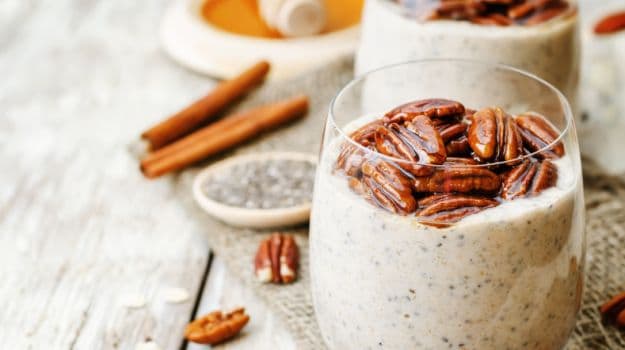
Pecans make a great addition to both sweet and savory foods. Use them as a yogurt topping or for some added crunch in trail mix, pancakes, or oatmeal. You can also make pecan-encrusted fish and chicken. Try incorporating pecans into stuffing recipes or baked goods. For a sweet treat or appetizer, stuff dates with a pecan and cream cheese.
11 Sources
Loaded: 2.35%
Pecan nuts contain monounsaturated fats such as oleic acid along with phenolic antioxidants which help reduce the risk of heart disease. According to the National Pecan Shellers Association, adding a handful of pecan nuts in your diet helps decrease LDL i.e. ‘badcholesterol’ and increase HDL i.e. ‘good cholesterol’, which in turn prevent stroke and coronary artery disease.
2. Improves Digestion
Nutritionist Anshul Jaibharat says, “Since pecan nuts are fiber-packed, they promote colon health and facilitate regular bowel movements. Pecan nuts prevent constipation and reduce the risk of hemorrhoids and colitis by cleaning out the gastrointestinal system.”
3. We Helps with Weight Loss
Consuming nuts enhances satiety and increases metabolism, research has indicated that a diet comprising pecan nuts helps in losing weight. The nuts are also very rich sources of several important B-complex groups of vitamins such as riboflavin, niacin, thiamin, pantothenic acid, vitamin B-6, and folates which together help increase the rate of metabolism.
4. Reduces the Risk of Certain Cancer
Pecan nuts protect the human body from cancer due to the anti-proliferative properties of ellagic acid which inhibit DNA binding of certain carcinogens such as nitrosamines and polycyclic aromatic hydrocarbons. They contain oleic acid, a fatty acid which has been found to reduce the risk of breast cancer. Pecan nuts also reduce the risk of colon cancer since they help clean the gastrointestinal system
.5. Anti-Inflammatory Benefits Pecans are rich in magnesium which is known for its anti-inflammatory benefits. Studies have proved that increased magnesium intake reduces inflammatory indicators in the body, and also reduces inflammation in the arterial walls, thus reducing the risk of arthritis, Alzheimer’s disease, cardiovascular disease, and other inflammatory ailments.
6. Boosts Immunity
Dr. Manoj K. Ahuja, Healing Touch Hospital, says “Adequate intake of manganese is vital for nerve conduction and brain function, and pecans are a rich source of manganese which is a powerful antioxidant. This trace mineral protects your nerve cells from free-radical damage, thus boosting immunity and protecting the body from diseases, infections, etc.”Skin Benefits and Hair Benefits of Pecans:Pecan nuts are an excellent source of vitamin-E, vitamin-A, zinc, folate and phosphorous which play an important role in maintaining good skin. Here are the skin benefits pecan nuts have to offer.
7. Prevents Skin Problems
The toxins inside your body cause breakouts, dullness and excess oil. Pecans are packed with fiber and aid in eliminating these toxins and waste from the body, thereby improving the appearance of your skin. Pecan nuts also contain vitamin A and zinc which help achieve a clear complexion and protect against skin infections.
8. Anti-aging Benefits
Pecan nuts contain numerous antioxidants including ellagic acid, vitamin A and vitamin E which fight and eliminate the free radicals responsible for causing premature skin aging. Thus, pecans can prevent the occurrence of fine lines, wrinkles and pigmentation.
9. Stimulates Hair Growth
Pecans are an excellent source of L-arginine, an amino acid which, when applied topically helps treat male pattern baldness as well as encourage the growth of healthy hair. L-arginine helps increase flexibility of the artery walls and makes them less prone to blood clots. This in turn increases the rate of blood flow throughout the body and to the hair roots which is vital for healthy hair growth and scalp.
10. Prevents Hair Loss
ack of iron in the body leads to anemia which is one of the common causes of hair loss. But pecans are a good source of iron and hence, combat hair loss.
When you think of pecans, the first thing to come to mind is probably sweet pecan pie. Pecans are a healthy nut when eaten on their own or as part of a hearty vegetable recipe.
Although pecans are typically associated with desserts, there are many ways to enjoy them in savory dishes. With several health benefits, pecans can easily become your new favorite snack.
Pecan Nutrition Facts
The following nutrition information is provided by the USDA for 1 ounce (28g) of pecan halves (about 19 halves).1
Pecans Nutrition Facts
Calories: 196
Fat: 20g
Sodium: 0mg
Carbohydrates: 4g
Fiber: 2.7g
Sugars: 1.1g
Protein: 2.6g
Iron: 0.7mg
Magnesium: 34.4mg
Zinc: 1.3mg
Thiamin: 0.2mg
Vitamin B5: 0.2mg
Folate: 6.2mcg
Vitamin E: 0.4mg
Carbs
Pecans are naturally low in carbohydrates. One ounce of pecan halves has just 4 grams of carbohydrates, the majority of which come from fiber.
Fats
Pecans are a high-fat nut with 20 grams per ounce. Fortunately, the vast majority of fat in pecans comes from heart-healthy monounsaturated and polyunsaturated fatty acids. There are only 1.7 grams of saturated fat per 1-ounce serving of pecans.
Protein
An ounce of pecans provides 2.6 grams of protein.
Vitamins and Minerals
Pecans have several fat-soluble vitamins, like vitamin E and vitamin A. They also have some B-vitamins, potassium, phosphorus, magnesium, calcium, and zinc.
Health Benefits of Pecans
Many of the health benefits of pecans come from their unsaturated fat and fiber content. Additionally, pecans are high in polyphenols with antioxidant effects.
Aids Diabetes Management
Pecans are beneficial for blood sugar control in several ways. Their healthy fat content and low carbohydrate levels prevent spikes in blood sugar. The fiber in pecans also helps to stabilize blood sugar. Increasing the consumption of tree nuts (without increasing total calorie intake) has been shown to lower hemoglobin A1C levels and fasting glucose, two key markers for diabetes management.2
Supports Weight Loss
According to data from the National Health and Nutrition Examination Survey (NHANES), consuming pecans and other tree nuts is associated with a lower body mass index (BMI) and waist circumference.3 Although pecans are high in calories, they are a satisfying and nutritious food that helps regulate blood sugar and appetite. Stick to a handful or 1/4 cup serving to be mindful of your portion size.
Body Mass Index (BMI) is a dated, biased measure that doesn’t account for several factors, such as body composition, ethnicity, race, gender, and age. Despite being a flawed measure, BMI is widely used today in the medical community because it is an inexpensive and quick method for analyzing potential health status and outcomes.
Protects Heart Health
Raw, unsalted pecans are certified by the American Heart Association's Heart-Check Program, meaning they fit within recommendations for foods low in saturated fat and sodium.4 Pecans have potassium, which helps lower blood pressure, and fiber, which helps reduce cholesterol. Consuming a handful of whole pecans daily has been found to improve lipid profiles by reducing LDL and total cholesterol levels.5
Reduces Cancer Risk
Post-menopausal breast cancer is inversely associated with the intake of peanuts and tree nuts, like pecans.6 Researchers followed more than 62,000 women for over 20 years. The data indicates that eating 10 grams of nuts daily reduces the risk of certain types of cancer. While previous studies had confirmed lower cancer mortality from higher nut intakes, this research demonstrates the preventative benefits of nut consumption.
Promotes Regularity
The fiber in pecans and other plant-based foods is essential for digestive health. Fiber regulates bowel movements and may even reduce the risk of intestinal cancer.7 By eliminating toxins and supporting healthy gut bacteria, fiber is crucial for physical well-being. With 3 grams of fiber in a 1/4 cup, pecans can help you work toward the daily goal of 25–35 grams per day.
Pecans Allergies
If you have a tree nut allergy, you should avoid pecans or foods made with pecans until you know if they are safe. It's possible to have an allergy to one type of tree nut and have a reaction to others.8
Allergic reactions to pecans or other tree nuts can range from mild to severe and may include life-threatening anaphylaxis. If you get diagnosed with a pecan allergy, your doctor may recommend carrying epinephrine at all times.
Varieties of Pecans
There are more than 1,000 varieties of pecans.9 Varieties are often named based on the place where they were grown, tribes that originate in the area, or fun names chosen by the developer (like Moneymaker or Kernoodle).
Pecans can be purchased raw or roasted, salted or unsalted, and shelled or unshelled. You may also find ground pecan products, like pecan meal or pecan flour. Pecan granules are finely chopped nuts that can be purchased by growers via mail.10 Pecan butter and pecan oil are also available.
When Pecans Are Best
Pecans are harvested in late September, which works out perfectly for the increased demand during the holiday season. Pecan kernels should be uniform in size and plump.10 Fresh pecans should be crisp, not limp, rubbery, or rancid-tasting.
Shelled pecans should be free of damage and wormholes. Shake the shell, feel its weight, and listen for a rattle. Rattling means the nuts inside are dry and not as fresh. The best shelled pecans are heavy for their size.
Storage and Food Safety
Store pecans in an airtight container in the refrigerator or freezer to maximize shelf-life.11 If you buy pecans in a can, jar, or bag, make note of the expiration date and try to use them shortly after opening.
How to Prepare Pecans
Pecans make a great addition to both sweet and savory foods. Use them as a yogurt topping or for some added crunch in trail mix, pancakes, or oatmeal. You can also make pecan-encrusted fish and chicken. Try incorporating pecans into stuffing recipes or baked goods. For a sweet treat or appetizer, stuff dates with a pecan and cream cheese.
Pecan nuts contain monounsaturated fats such as oleic acid along with phenolic antioxidants which help reduce the risk of heart disease. According to the National Pecan Shellers Association, adding a handful of pecan nuts in your diet helps decrease LDL i.e. ‘bad cholesterol’ and increase HDL i.e. ‘good cholesterol’, which in turn prevent stroke and coronary artery disease.
"This Content Sponsored by Buymote Shopping app
BuyMote E-Shopping Application is One of the Online Shopping App
Now Available on Play Store & App Store (Buymote E-Shopping)
Click Below Link and Install Application: https://buymote.shop/links/0f5993744a9213079a6b53e8
SUN FLOWER SEEDS CUTIVATION AND BENIFITS Indrotuction Production Usage Nutrition Pressed oil Hulls Nutritional value Health benefits Inflammation Heart disease Diabetes Potential downsides Calories and Sodium Cadmium Sprouted seeds Stool blockages Tips for eating A sunflower seed is a seed from a sunflower ( Helianthus annuus ). There are three types of commonly used sunflower seeds: linoleic (most common), high oleic , and sunflower oil seeds. Each variety has its own unique levels of monounsaturated, saturated, and polyunsaturated fats. The information in this article refers mainly to the linoleic variety. For commercial purposes, sunflower seeds are usually classified by the pattern on their husks. If the husk is solid black, the seeds are called black oil sunflower seeds. The crops may be referred to as oilseed sunflower crops. These seeds are usually pressed to extract their oil. Striped sunflower seeds are pr...
HEALTH BENIFITS OF GRAINS & CEREALS Indrotuction High in nutrients and fiber Lower your risk of heart disease Lower your risk of stroke Reduce your risk of obesity Lower your risk of type 2 diabetes Support healthy digestion Reduce chronic inflammation May reduce your risk of cancer Linked to a reduced risk of premature death Whole grains are a great source of fiber and have positive health effects like a lowered risk of obesity and type 2 diabetes. 9 Reasons to Add Whole Grains to Your Diet This video discusses the benefits of whole grain. 0 seconds of 59 seconds Volume 0% Whole grains have been a part of the human diet for tens of thousands of years ( 1 Trusted Source ). But proponents of many modern diets, such as the paleo diet, claim that eating grains is bad for your health. While a high intake of refined grains is linked to health problems like obesity and inflammation, whole grains are a different story. In fact, eating whole grains...
HEALTH BENIFITS AND MEDICIANAL VALUES AND IMPORANT ROLE OF DAILY USES AND FOOD PREPARATION CINNAMON TREE BARK Cinnamon is a spice obtained from the inner bark of several tree species from the genus Cinnamomum . Cinnamon is used mainly as an aromatic condiment and flavouring additive in a wide variety of cuisines , sweet and savoury dishes, biscuits, breakfast cereals , snack foods , bagels , teas , hot chocolate and traditional foods . The aroma and flavour of cinnamon derive from its essential oil and principal component, cinnamaldehyde , as well as numerous other constituents, including eugenol . Cinnamomum verum , from Koehler's Medicinal-Plants (1887) Close-up view of raw cinnamon bark Cinnamon is the name for several species of trees and the commercial spice products that some of them produce. All are members of the genus Cinnamomum in the family Lauraceae . Only a few Cinnamomum species are grown commercially for spice....





Comments
Post a Comment